Research Achievement Sharing: Advanced PV Materials and Reliability Assessment
Research Achievement Sharing: Advanced PV Materials and Reliability Assessment.
By Assistant Professor Hsin-Hsin Hsieh of Department of Meterials and Mineral Resource Engineering
Research Background and Objectives
The global energy crisis has accelerated the adoption of silicon-based photovoltaic (PV) technology as a dominant renewable energy source. A primary industrial challenge is ensuring a service life of 25 to 30 years under extreme outdoor conditions. The research focuses on the optimization of encapsulation materials, micro-analytical failure mechanisms, and long-term reliability assessment of interconnect solder joints, aiming to establish scientific material selection criteria and lifetime prediction models.
Advancements in Encapsulation
Transition from Thermoset to Thermoplastic Standard PV modules predominantly utilize Ethylene Vinyl Acetate (EVA) for its high optical transparency and flexibility. However, EVA requires a chemical cross-linking process exceeding 20 minutes and is prone to Norrish-type degradation under UV and moisture, producing acetic acid that triggers ribbon corrosion and delamination. Investigations into thermoplastic polyolefins demonstrate significant technical advantages: eliminating cross-linking agents reduces processing time, and enhancing manufacturing efficiency. Furthermore, POE provides superior volume resistivity (up to 1.9×10¹⁵Ω⋅cm), effectively mitigating Potential Induced Degradation (PID) and maintaining chemical stability throughout extended operational lifespans. Furthermore, FTIR analysis of backsheet materials reveals significant chemical bond evolution and scission correlated with increasing UV dosage. This microscopic structural degradation serves as a critical metric for predicting the long-term weathering stability of PV backsheets.
Interconnection Reliability and Microstructural Kinetics
The electrical degradation of PV modules is fundamentally governed by the interfacial integrity of interconnect solder joints. This research investigates the multi-layered Cu/SAC305/Ag material system by employing solid-state diffusion kinetics models (x2=kp⋅t+x0) to quantify the growth and evolutionary behavior of Intermetallic Compounds (IMC), specifically Cu6Sn5 and Ag3Sn, during thermal aging. High-resolution microscopic analysis reveals a critical morphological transition where the initial scalloped-like IMCs gradually evolve into a planar-like continuous layer, accompanied by significant coarsening of the Ag3Sn phase and interfacial grain impingement. By precisely measuring the growth kinetics of these micron-level structures, this research successfully establishes a quantitative correlation between microstructural attributes and macroscopic failure modes, such as increased serial resistance and power drop. Integrated with IEC 62892 environmental testing standards, this approach facilitates the formulation of precise reliability indicators for diverse climatic conditions (hot dry, warm damp, and moderate), providing a robust scientific framework for predicting the 25-to-30-year operational lifespan of advanced energy packaging systems.
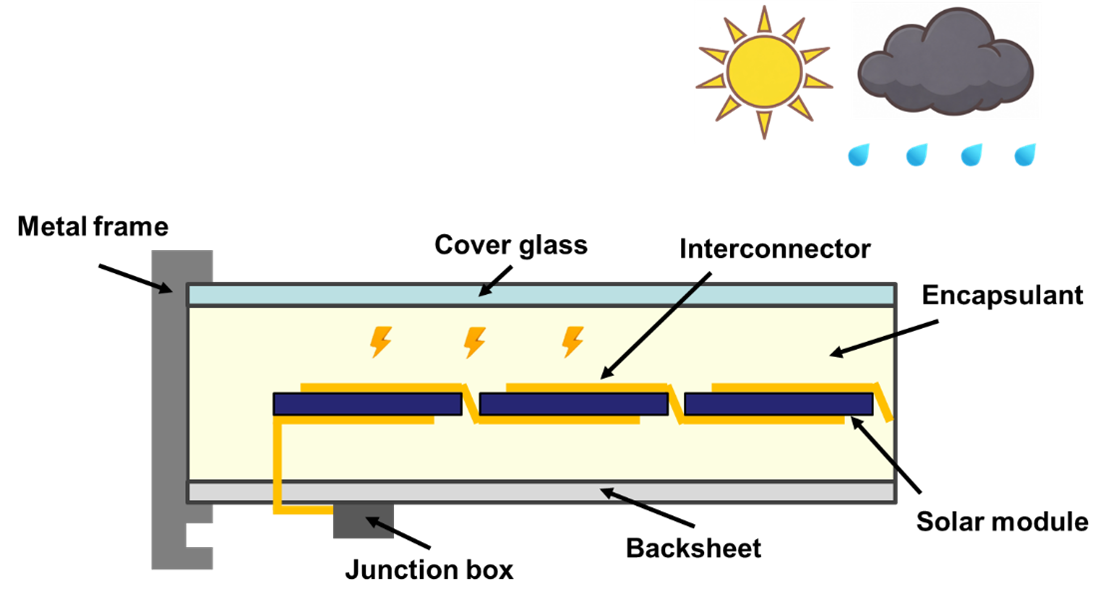
Fig.1. Reliability Challenges of Solar Modules and Materials.

Fig.2.Packaging material evaluation technology:Insulation test methods

Fig.3.Packaging material evaluation technology:Module electroluminescence analysis
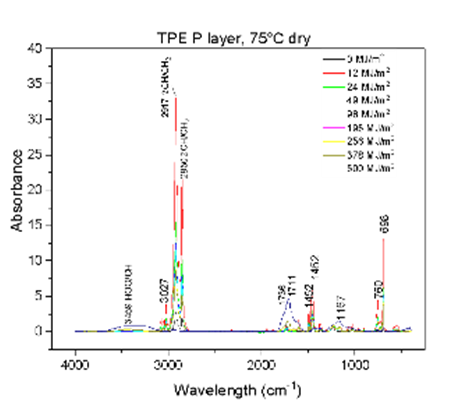
Fig.4.Packaging material evaluation technology: Backplate material analysis
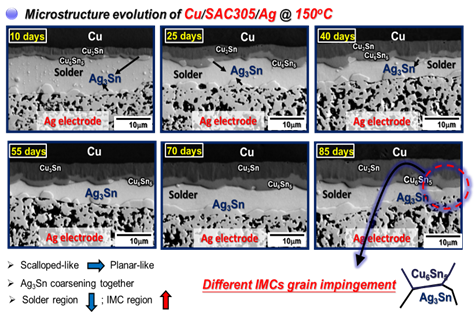

Fig.5.Solder joint interface aging mechanism: SEM image analysis of Cu/SAC305/Ag interface at different aging times to show the IMC growth process.